Low wedding aisle flower meadows create a lush, garden-grown look without blocking the ceremony view. This complete tutorial uses reusable chicken-wire mechanics, pin frogs and shallow water trays instead of floral foam. The result is refined, moveable and easier to repurpose at the reception.
Our spring palette combines white roses and stock with butter-yellow ranunculus, pale-blue delphinium, small white daisies and airy greenery. The same construction method can be adapted to other colors once you understand the spacing, stem order and mechanics.
Project overview
- Aisle length shown: approximately 40 feet.
- Meadow count: eight low arrangements in four symmetrical pairs.
- Spacing: approximately 8 feet between pairs, adjusted to chair rows and photography angles.
- Target height: approximately 12–24 inches, with taller line flowers used sparingly.
- Estimated design time: 4–6 hours for two practiced designers, excluding conditioning.
- Best venue: a protected indoor or conservatory ceremony with a level hard floor.
Materials and estimated flower quantities
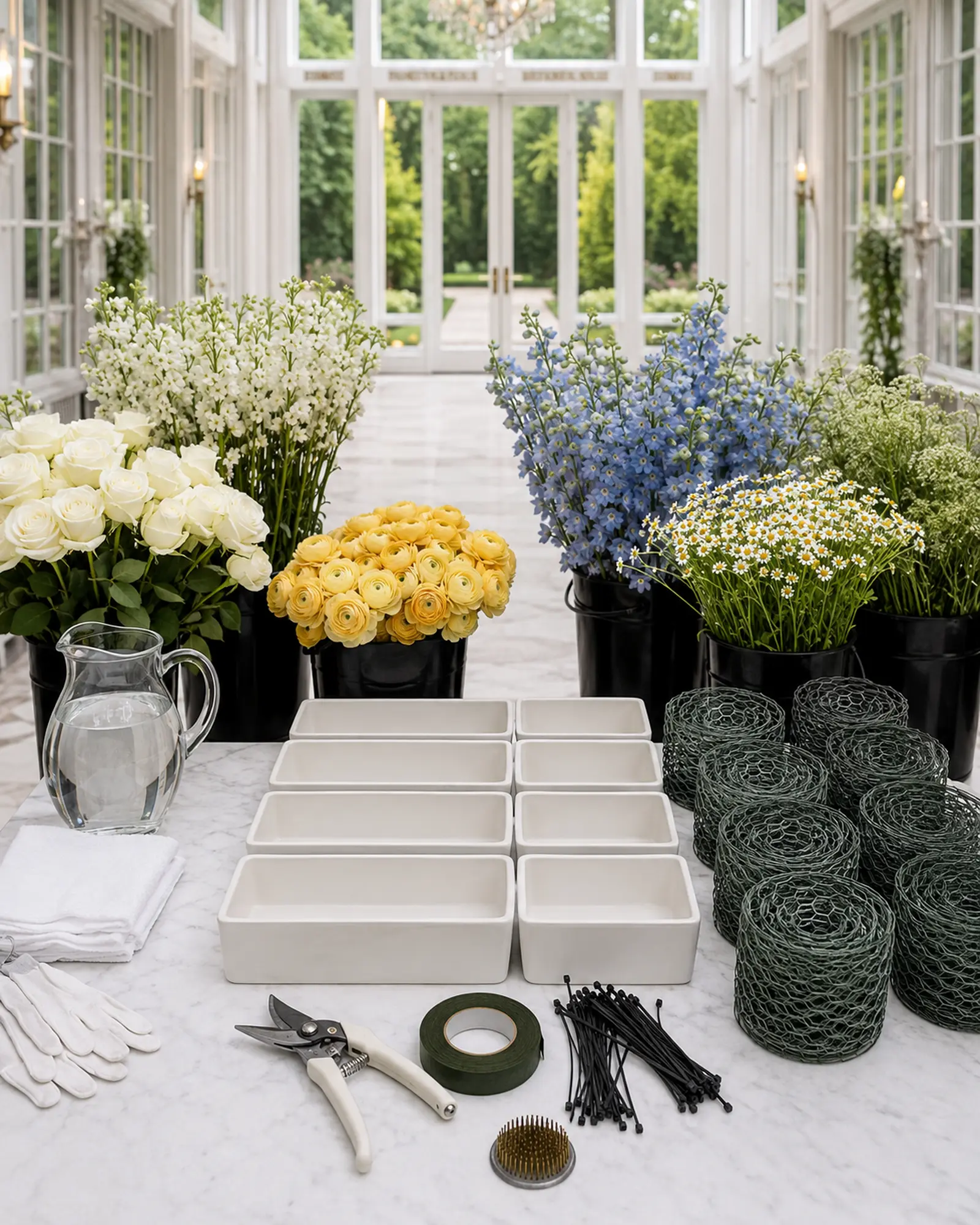
For eight medium meadow trays, a useful starting estimate is:
- 40–48 white roses
- 24–32 white stock stems
- 32–40 butter-yellow ranunculus or similar focal blooms
- 24–32 pale-blue delphinium stems
- 40–56 small daisy or feverfew stems
- 40–56 stems of airy greenery and textural foliage
- 10–15% extra product for breakage, substitutions and final balancing
These quantities are estimates. Flower head size, stem branching, season, recipe density and wholesale bunch counts vary. Ask your supplier what is actually available before promising an exact recipe.
Essential supplies
- Eight watertight rectangular trays, approximately 18–24 inches long
- Plastic-coated floral chicken wire
- Eight small pin frogs or flower frogs
- Waterproof floral tape and reusable cable ties
- Clean flower buckets and fresh water
- Professional floral snips or bypass pruners
- Protective gloves, towels and a small water pitcher
- Measuring tape and low-tack spacing markers approved by the venue
Coated floral chicken wire
Choose coated wire that can be shaped into a low cage and cleaned for reuse. Confirm the roll dimensions before ordering.
Pin frogs and waterproof floral tape
Pin frogs anchor a few important stems while tape and ties keep the wire cage seated in the tray.
Floral snips
Use clean, sharp snips for accurate cuts. Disinfect them before beginning and between diseased plant material.
Optional upgrades
- Premium garden roses or butterfly ranunculus
- Additional delphinium for a taller meadow silhouette
- Matching arch-base arrangements
- Rolling transport shelves or tray covers
- Reception-table repurposing plan and venue staff support
Step 2: Measure the aisle and prepare the mechanics
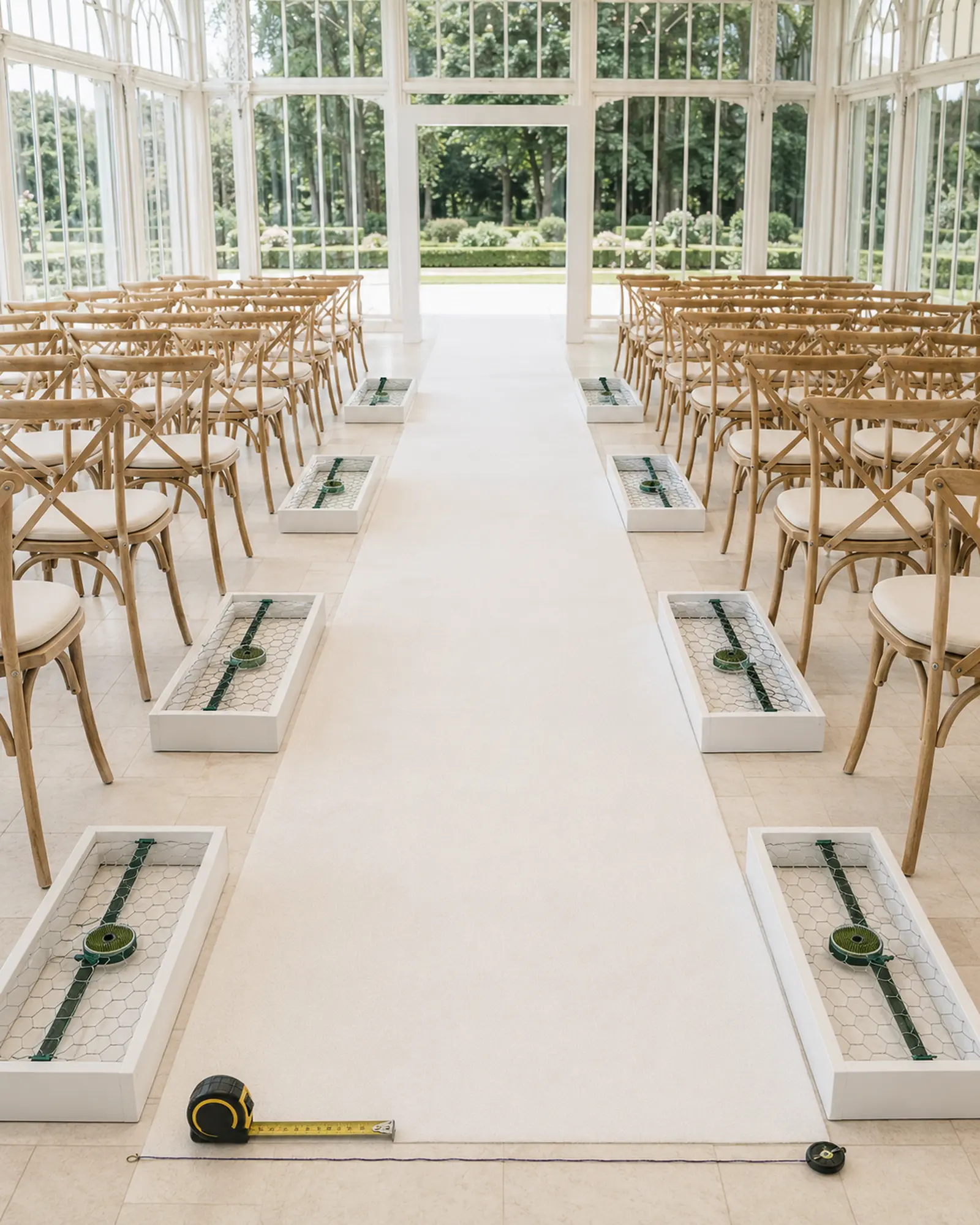
- Confirm the ceremony aisle width, chair count, processional direction and photography plan.
- Preserve at least the venue-required clear path down the center. Never guess at accessibility or fire-code requirements.
- Place four tray pairs at visually useful chair rows, roughly 8 feet apart.
- Shape coated chicken wire into low pillows that fit inside each tray.
- Anchor the wire to the tray with waterproof tape or discreet ties.
- Seat one pin frog beneath or within the wire at the primary focal zone.
- Add clean water only after the trays are in their final positions.
Keep every tray fully outside the walking path and test the setup from the processional, guest and photographer viewpoints. If the first meadow hides the remaining aisle, lower it or shift it slightly toward the chair row.
Step 3: Condition and sort the flowers
Remove leaves that would sit below the water line, recut the stems and hydrate them according to the needs of each variety. Keep flowers cool and protected from direct sun. Sort stems into four roles:
- Line: pale-blue delphinium and a few tall airy stems.
- Mass: white stock and branching greenery.
- Focal: white roses and butter-yellow ranunculus.
- Texture: daisies, feverfew and delicate foliage.
Step 4: Build one prototype meadow first
Complete one tray before dividing every flower across all eight. The prototype establishes height, width and stem count. Photograph it and write down the approximate recipe so the remaining meadows feel related without becoming identical.
- Add greenery low and wide to conceal the tray edges.
- Set three to five delphinium lines at different angles.
- Add white stock to build soft mass through the center.
- Place roses and ranunculus in uneven groups of two or three.
- Finish with daisies and airy stems that connect the focal groups.
Step 5: Repeat the recipe and balance the aisle
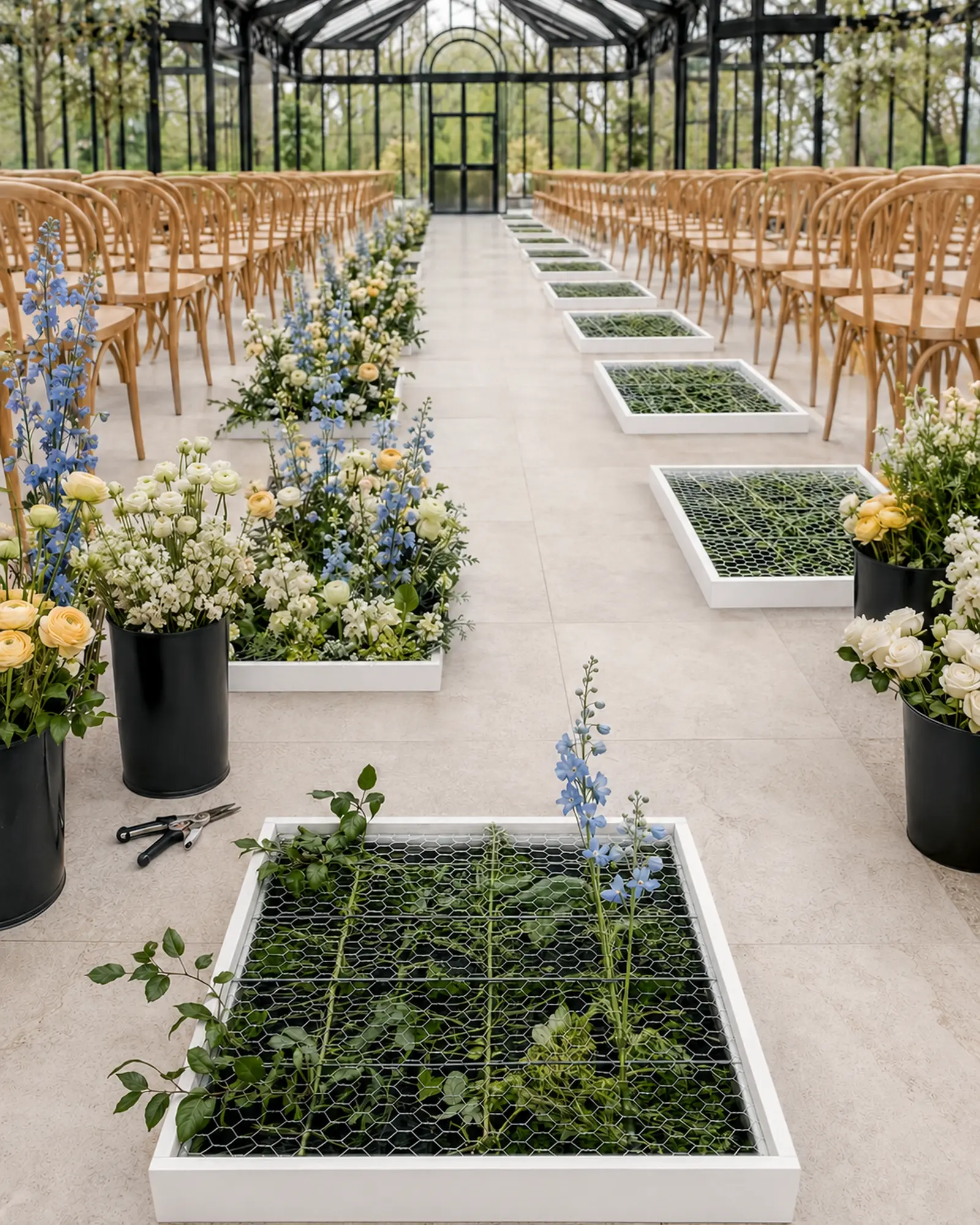
Pair meadows by visual weight rather than making exact copies. The left and right sides should feel balanced when viewed from the aisle entrance. Alternate the tallest delphinium lines slightly so the design feels natural.
After four trays are complete, stand at the beginning, middle and ceremony end of the aisle. Correct any tray that is too tall, too yellow, too blue or too dense before finishing the remaining four.
Step 6: Finish, hydrate and photograph
- Top up each tray carefully without wetting the floor.
- Remove damaged petals and any foliage touching the aisle.
- Confirm every cable tie, wire edge and pin frog is covered.
- Wipe all tray exteriors and the surrounding floor.
- Check the aisle clearance again with the venue coordinator.
- Photograph the design in straight-on, guest-eye and low detail views.
Measurement and stem-placement guide
For a 20-inch tray, start with a finished meadow about 30–36 inches wide and 12–18 inches high. A few delphinium lines can rise to approximately 24 inches if they remain airy and do not interrupt views. Keep the densest focal flowers low, then extend lighter stems outward.
Allow space between the four pairs so the décor creates rhythm instead of becoming one continuous wall. If the aisle is shorter than 40 feet, use three pairs or reduce the tray width rather than squeezing eight arrangements too close together.
Budget, standard and luxury versions
Budget version
Create six trays with seasonal local flowers, more greenery, spray roses and branching daisies. Concentrate the fullest pair at the ceremony end.
Standard version
Use eight trays with the balanced white, butter-yellow and pale-blue recipe shown here. Repurpose the meadows along the sweetheart table or stage after the ceremony.
Luxury version
Add premium garden roses, butterfly ranunculus, specialty delphinium and two matching arch-base meadows. Increase flower quality and stem variety while preserving the low, airy silhouette.
Decorator pricing guidance
Price the project from the actual recipe and production plan. Include:
- Flowers, greenery and expected waste
- Reusable trays, pin frogs and chicken-wire mechanics
- Conditioning, processing and design labor
- Cold storage and transport space
- Venue installation window and floor protection
- Repurposing labor between ceremony and reception
- Strike, cleanup, rentals, overhead and profit
Use the Elegant Creators pricing calculator to organize your costs. Do not quote a finished price until the final flower recipe, aisle length, delivery access and repurposing plan are confirmed.
Safety and flower-care notes
Common problems
The arrangements look like separate centerpieces
Extend a few low stems horizontally and vary the delphinium angles. A meadow should feel wider than it is tall.
The aisle looks too busy
Remove one full pair or increase the spacing. More negative space often makes each meadow look more expensive.
The chicken wire is visible
Add low greenery around the tray edge and reposition focal stems. Do not solve the problem by overstuffing the center.
The left and right sides feel mismatched
Compare pairs from the aisle entrance. Match their visual weight and tallest line rather than copying every flower placement.
Frequently asked questions
Can I make wedding aisle flowers without floral foam?
Yes. Watertight trays, secured coated chicken wire and pin frogs can support a wide range of fresh-flower recipes. The mechanics must fit the stems and transport plan.
How early can I make the meadows?
That depends on the flowers, refrigeration and transport. Condition the flowers in advance, but design as close to the event as practical and keep finished trays cool, hydrated and protected.
Can the aisle meadows be reused at the reception?
Yes. They can line a stage, sweetheart table or entrance if someone is assigned to move them safely and the second location is measured in advance.
What if pale-blue delphinium is unavailable?
Ask the florist or wholesaler about seasonal alternatives with a similar line, such as larkspur. Never promise a substitution until you have checked its size, color and availability.
Final reveal
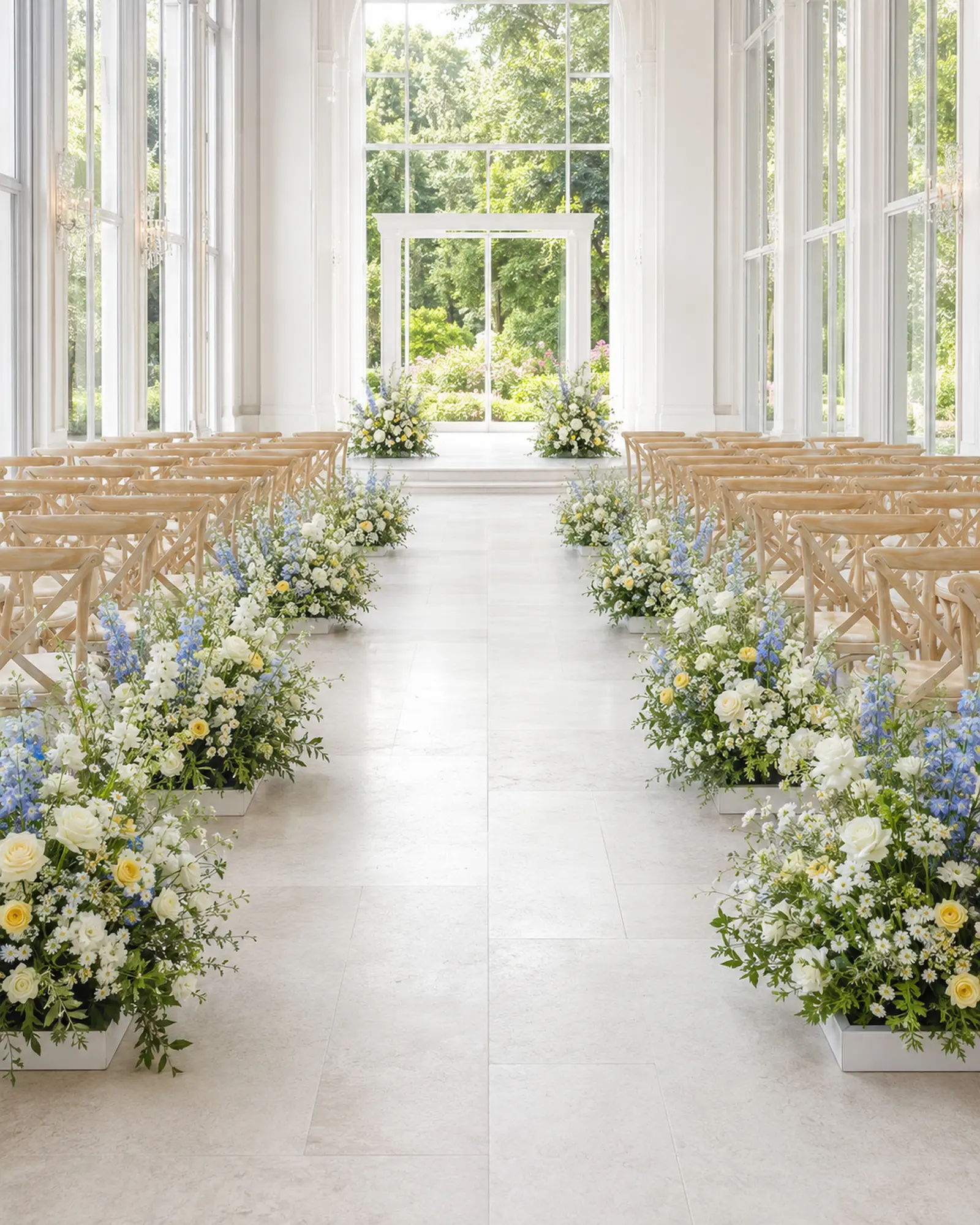
Continue planning with Elegant Creators
Bring your floral mechanics questions to the Elegant Creators community, build your quote with the pricing calculator, and explore local event professionals through the vendors list.
Join the conversation
What do you think?
Share your thoughts, questions or experience with this design. We would love to hear from you.