
Can you really tell whether a wedding design cost $5,000 or $50,000 just by looking at it? Our latest Elegant Creators video turns that question into a visual challenge by comparing ten affordable wedding designs with ten high-end celebrations.
The fun is in making your guess, but the most useful lesson comes afterward: expensive-looking décor is not created by price alone. Scale, placement, lighting, repetition, fabric, and editing often influence the final impression more than the number on an invoice.
Take the $5K vs $50K Wedding Challenge
Watch the video once without pausing and record your first guess for every comparison. Then watch it again and focus on the construction details instead of the overall mood. Look at the linens, the number and height of floral arrangements, the chair style, the glassware, the lighting plan, the density of the tablescape, and how much of the room was transformed.
A high budget can buy more custom fabrication, labor, flowers, rentals, and production time. Still, a focused affordable design can photograph beautifully when every dollar supports one clear visual idea.
What Usually Makes Wedding Décor Look More Expensive?
1. One Strong Focal Point
Luxury rooms tend to give the eye somewhere obvious to land: a fully designed sweetheart table, a dimensional ceremony structure, a dramatic entrance, or a sculptural bar. A smaller budget becomes more effective when it creates one complete statement instead of scattering small decorations around the entire venue.
If the reception budget is limited, prioritize the area that appears in the most photographs. Complete that scene from floor level to eye level before purchasing extra accessories for low-impact corners.
2. Correct Scale
A centerpiece can be beautiful and still feel underwhelming if it is too small for the ballroom. The reverse is also true: an oversized arrangement on a narrow table can obstruct guests and look poorly planned.
Before ordering décor, measure the table diameter, ceiling height, stage width, doorway, and usable installation footprint. Photograph the empty space from the guest entrance. This reveals whether your proposed design has enough height and visual mass to register in the room.
3. Layered Textures
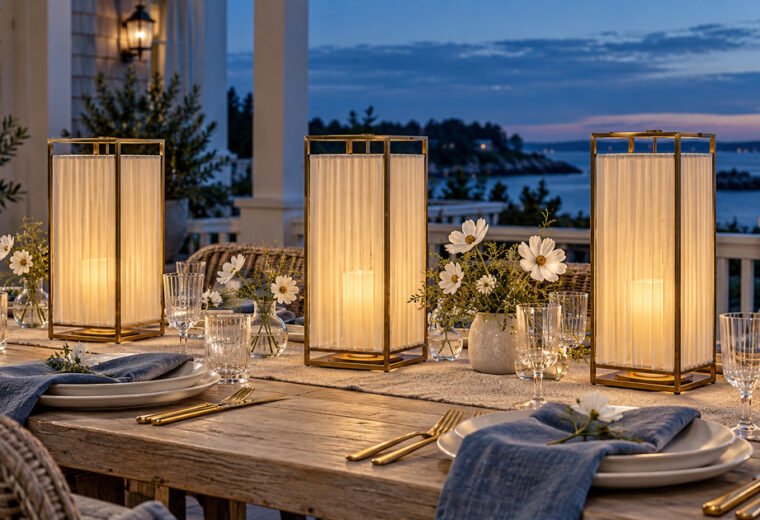
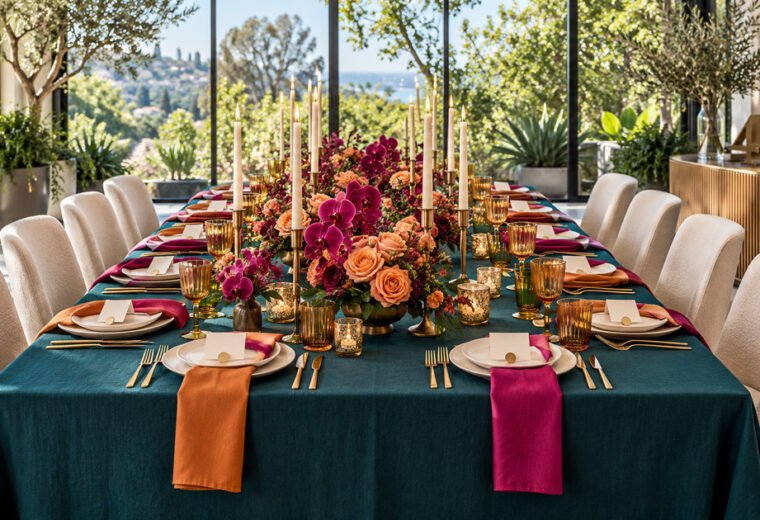
Texture is one of the fastest ways to create richness without adding clutter. A textured linen, pleated napkin, clear ribbed glass, metallic charger, or velvet accent changes how light moves across a table.
The key is restraint. Choose two or three compatible textures and repeat them consistently. Too many unrelated finishes can make even expensive rentals look disconnected.
4. Intentional Candlelight
Grouped light sources create depth, reflections, and a warm visual rhythm. Instead of placing one candle beside each centerpiece, vary the height while maintaining safe distances from flowers, fabric, menus, and guests.
Always confirm the venue’s flame policy. Use enclosed flames when required or choose high-quality flameless candles with a natural warm color. Test the full tablescape after the main room lights are lowered.
5. Repetition
Luxury design often looks calm because key shapes and materials repeat. Matching candle groupings, consistent floral recipes, aligned napkin folds, and repeated chair silhouettes make the entire room feel deliberate.
On a smaller budget, repetition can outperform variety. Twelve tables using the same well-edited recipe generally look more polished than twelve unrelated centerpiece ideas.
6. Better Editing
More décor does not automatically create more luxury. Professional rooms usually have breathing space around the important elements. Removing weak accessories can improve a design faster than purchasing additional ones.
During setup, take a photograph from the entrance and review it on a phone screen. Anything that creates visual noise, blocks a focal point, or interrupts a clean line should be moved or removed.
Where a Higher Wedding Budget Makes the Biggest Difference
A larger budget becomes visible when it supports labor-intensive or inventory-heavy choices. These may include custom-built structures, ceiling installations, room-wide draping, specialty furniture, premium linens, abundant fresh flowers, upgraded lighting, detailed stationery, tabletop rentals, and a larger installation crew.
It also pays for what guests may never notice directly: engineering, delivery vehicles, insurance, rigging, floor protection, overnight labor, strike crews, backup equipment, and the time required to test complicated installations.
Those expenses are meaningful, but they do not guarantee beautiful design. A successful luxury production still needs proportion, color discipline, thoughtful placement, and clean execution.
How to Make a $5K Design Feel More Luxurious
- Choose the hero area first. Decide whether the ceremony, sweetheart table, entrance, or guest tables will carry the strongest design statement.
- Limit the palette. Use two main colors, one neutral, and one metallic or textured accent.
- Rent statement pieces. Specialty chairs, textured linens, arches, pedestals, and candleholders are often better rented than purchased.
- Use flowers strategically. Concentrate premium blooms at eye level and supplement with candlelight, fabric, foliage, or sculptural mechanics.
- Repeat one detail. A consistent napkin fold, candle grouping, or bud-vase recipe can unify the whole room.
- Protect installation time. A beautiful plan can still fail when the team lacks enough setup time. Simplify mechanics before sacrificing finish quality.
- Photograph and edit. Review the design from guest viewpoints, remove clutter, straighten every place setting, and correct uneven spacing.
Budget Comparison Checklist
When comparing two wedding designs, ask these questions before assuming which one cost more:
- How much of the venue was transformed?
- Are the flowers fresh, artificial, or mixed?
- Does the design use standard rentals or custom fabrication?
- Are the linens basic, specialty, or custom-made?
- Is professional lighting shaping the room?
- How many labor hours were needed for installation and breakdown?
- Are the details repeated consistently across every guest table?
- Does the venue itself provide much of the visual impact?
The Venue Can Change the Entire Equation
A naturally beautiful venue can reduce the amount of décor required. Architectural windows, a landscaped garden, an elegant ballroom, or a waterfront view already contributes color, scale, and atmosphere.
When touring venues, photograph the space during the same time of day as the wedding. Note existing chairs, tables, lighting, draping, restrictions, load-in routes, and included furnishings. A higher rental fee can sometimes reduce the décor budget if the venue already provides attractive infrastructure.
Decorator Pricing: Do Not Compare Materials Alone
Clients often compare a flower count or rental list without accounting for professional labor and risk. A proper décor quote may include design development, sourcing, mockups, preparation, loading, transportation, installation, styling, emergency supplies, breakdown, cleaning, and equipment depreciation.
For decorators, the goal is not to make every quote look inexpensive. The goal is to explain what the client receives, identify the highest-impact priorities, and design a solution that can be executed safely within the approved budget and setup window.
Frequently Asked Questions
Can a $5,000 décor budget create a luxury look?
Yes, especially in a visually strong venue with a focused guest count. Concentrate the budget on one hero installation, coordinated tables, flattering light, and clean execution rather than trying to transform every surface.
What should couples upgrade first?
Upgrade the item that affects the largest visible area or appears in the most photographs. Depending on the venue, that may be linens, chairs, lighting, the ceremony focal point, or the sweetheart table.
What makes affordable décor look cheap?
Affordable décor does not have to look cheap. Common problems are incorrect scale, wrinkled linens, visible mechanics, inconsistent colors, poor lighting, sparse placement, clutter, and rushed installation.
Do more flowers always make a wedding look more expensive?
No. The shape, placement, freshness, color, and proportion of an arrangement matter as much as volume. Intentional clusters and strong focal moments can have more impact than evenly spreading flowers everywhere.
Final Takeaway
The difference between a $5,000 wedding design and a $50,000 production is real, but the price is not always obvious in a single photograph. Thoughtful design can make a modest budget feel elevated, while poor proportion and execution can weaken an expensive room.
Watch the full video, record your guesses, and pay attention to the details that fooled you. Those are often the same details worth prioritizing in your own wedding or event design.
Watch “$5,000 vs $50,000 Wedding: Can You Tell Which Costs More?” on YouTube
Join the conversation
What do you think?
Share your thoughts, questions or experience with this design. We would love to hear from you.